Die Geschichte der Erde
4,54 Milliarden Jahre, zusammengescrollt auf einen einzigen Tag. Scroll dich durch die Tiefenzeit und spüre, wie spät und wie kurz wir erscheinen.
↓ Nach unten scrollen
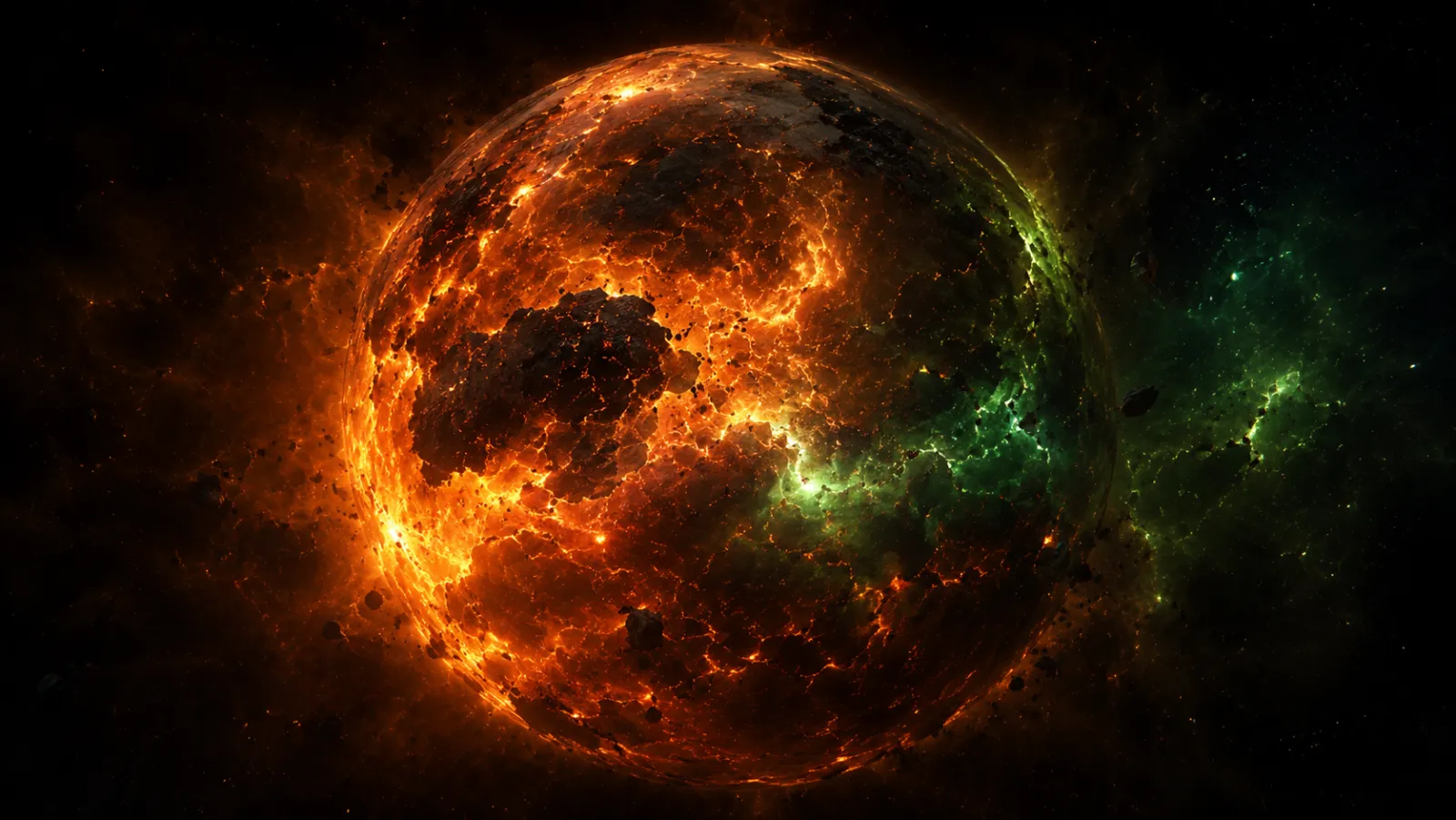
Die Erde entsteht
Aus der Staubscheibe der jungen Sonne ballt sich die Erde zusammen, glühend, ohne feste Oberfläche, ohne Luft.
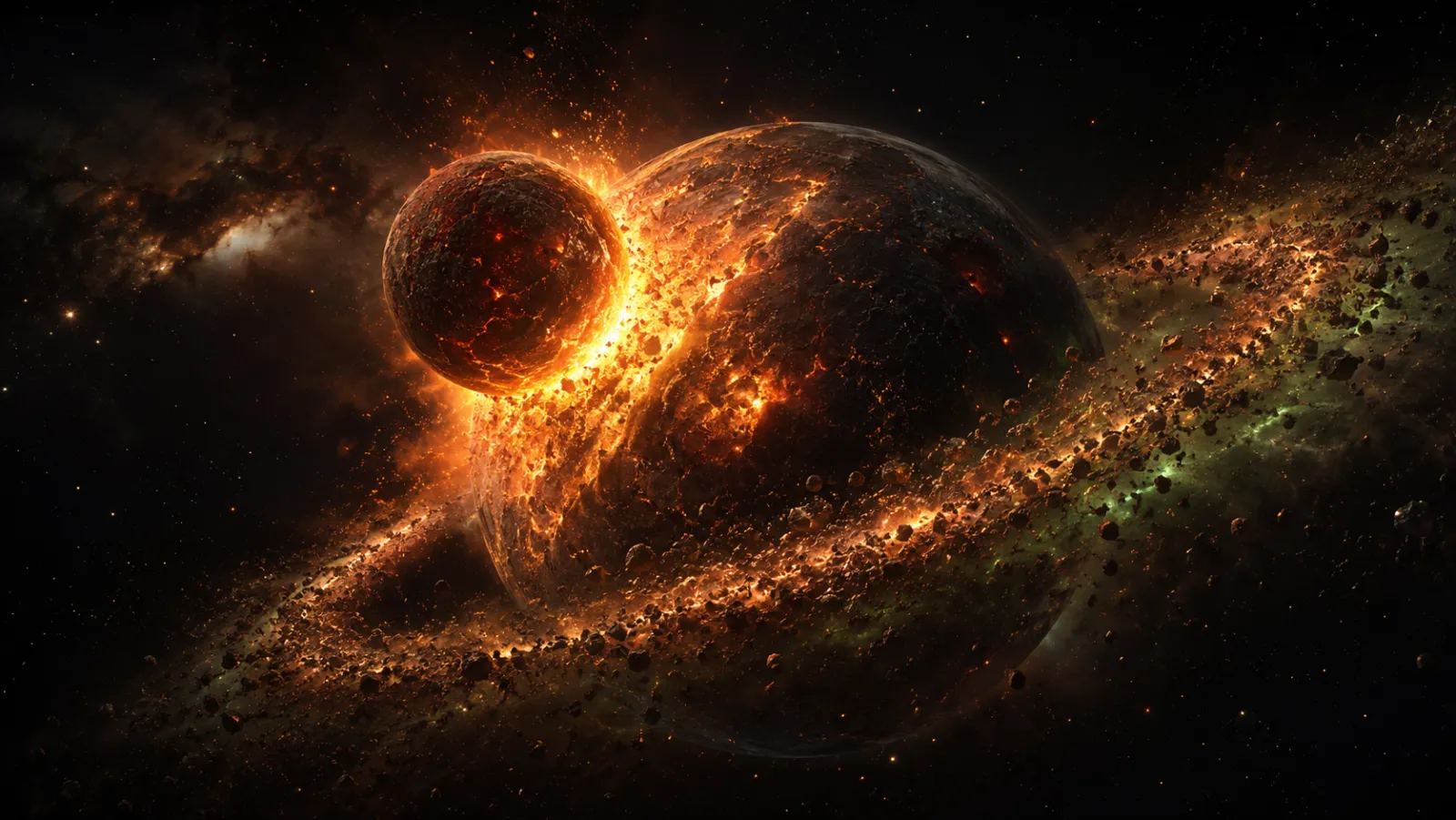
Der Mond entsteht
Ein etwa marsgrosser Körper trifft die Erde. Aus den Trümmern, die in eine Umlaufbahn geschleudert werden, formt sich der Mond.
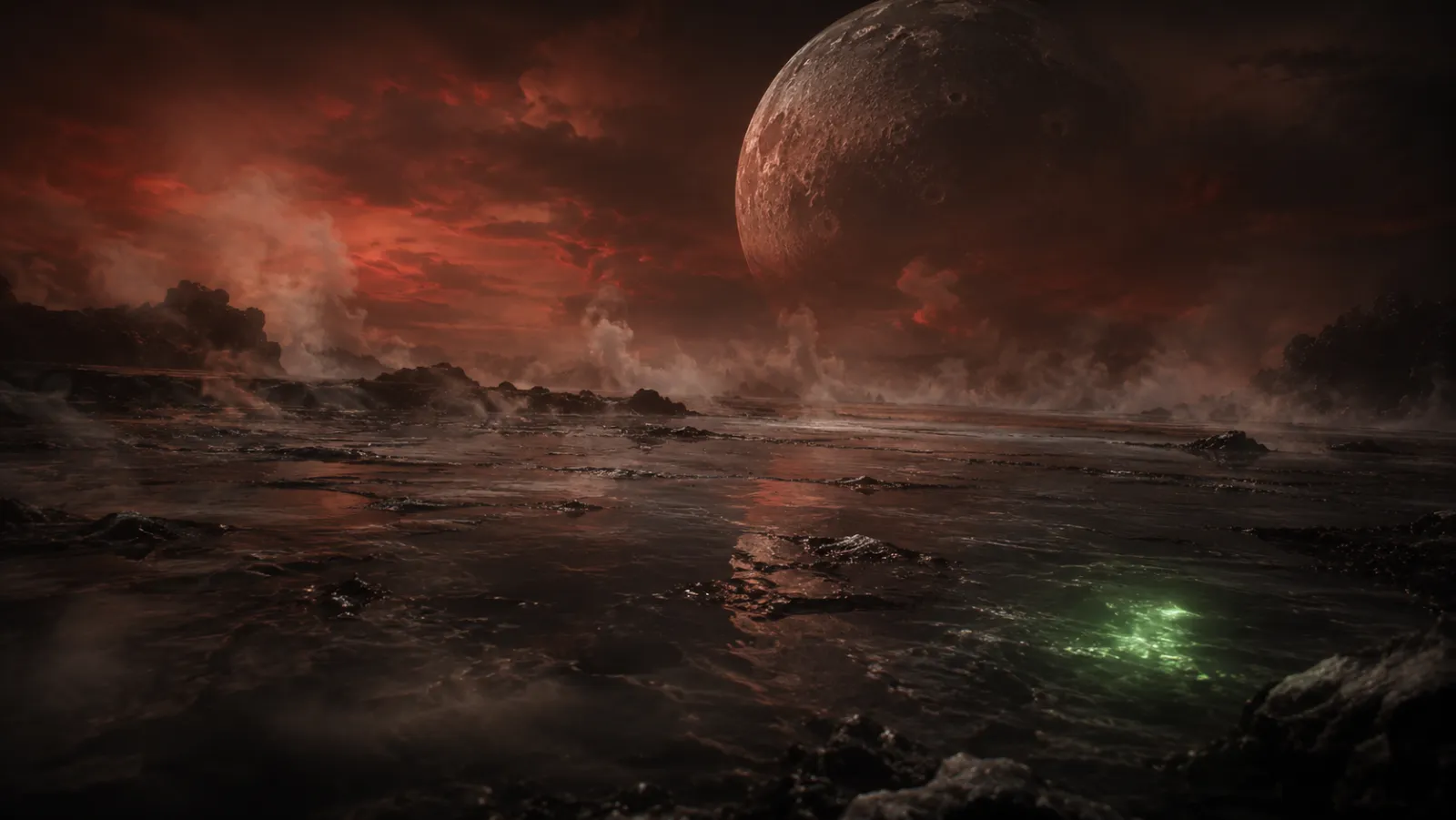
Die ersten Ozeane
Die Erde kühlt genug ab, dass flüssiges Wasser bleibt. Uralte Zirkon-Kristalle zeugen von einer frühen Kruste.
Das erste Leben
In flachen Meeren erscheint mikrobielles Leben. Stromatolithen, geschichtete Matten aus Mikroben, sind seine ältesten robusten Spuren.
Sauerstoff-Fotosynthese
Cyanobakterien beginnen, Wasser zu spalten und Sauerstoff freizusetzen, lange bevor er sich in der Luft anreichert.
Die grosse Sauerstoffwende
Über Jahrmillionen reichert sich Sauerstoff in der Atmosphäre an, die erste grosse chemische Revolution des Planeten.
Die komplexe Zelle
Eine Zelle nimmt ein Bakterium auf. Aus ihm werden Mitochondrien, die Kraftwerke allen komplexen Lebens.
Schneeball Erde
Gletscher reichen bis in die Tropen. Die Erde friert fast vollständig zu, vermutlich mit dünnem Eis am Äquator.
Die ersten Tiere
Weiche, vielzellige Lebewesen besiedeln den Meeresboden, die rätselhafte Ediacara-Welt.
Die kambrische Vielfalt
Über einige Millionen Jahre entfalten sich fast alle grossen Baupläne der Tiere, samt der ersten echten Augen.
Pflanzen erobern das Land
Erst Moose, dann hohe Wälder ergrünen die Kontinente und verändern Klima und Atmosphäre.
Das grosse Sterben
Gewaltiger Vulkanismus löst das grösste bekannte Massensterben aus. Der allergrösste Teil der Meeresarten verschwindet.
Das Zeitalter der Dinosaurier
Dinosaurier beherrschen das Land über rund 165 Millionen Jahre. Aus einer ihrer Linien werden die Vögel.
Der Einschlag
Ein Asteroid beendet, zusammen mit Vulkanismus und Vorbelastung, die Nicht-Vogel-Dinosaurier. Die Säugetiere steigen auf.
Homo sapiens
Unsere Art erscheint, in den allerletzten Sekunden des Tages.
Ackerbau und Heute
Ackerbau, Städte und die ganze Gegenwart drängen sich in den allerletzten Wimpernschlag des Tages.
Wäre die ganze Erdgeschichte ein einziger Tag, erschiene unsere Art erst wenige Sekunden vor Mitternacht. Alles, was Menschen je gebaut, gedacht und erzählt haben, geschah im allerletzten Augenblick.
Daten nach der geologischen Zeitskala. Datierungen sind beste wissenschaftliche Schätzungen mit Unsicherheiten; die 24-Stunden-Uhr ist ein Veranschaulichungs-Werkzeug.